




Building pathology

Building pathology is a holistic approach to studying and understanding buildings, and in particular, building defects and associated remedial action.
In a medical context, pathology is the study of diseases in order to determine their causes and prescribe treatment. Similarly, building pathology involves the methodical study of buildings, their components, and environment, to address failures.
Building defects are aspects of the building that were not completed in accordance with the contract or that have failed. Defects can be 'patent' or 'latent'. Patent defects are those which can be discovered by reasonable inspection. Latent defects are those which cannot be discovered by reasonable inspection, for example problems with foundations which may not be apparent.
Defects may occur because of wide a range of issues, such as:
- Design deficiencies.
- Material deficiencies.
- Specification problems.
- Workmanship deficiencies.
- Deterioration.
- Maintenance and repair deficiencies.
- Improper use.
- Environmental and other external factors.
Defects may be:
- Fundamental. For example, requiring demolition, making the building unsafe or being in breach of a permission.
- Functional. Affecting the clients beneficial occupancy of the building.
- Cosmetic. Not affecting the clients beneficial occupancy of the building.
When defects become apparent, remedial work may be necessary to correct them. However, this is not always straight forward:
- It is not always clear what constitutes a defect.
- It is not always clear what has caused a defect. It may be a combination of design and workmanship deficiencies, or an apparent defect in finishes may actually be caused by a structural problem.
- It is not always clear where the fault lies, or it may lie with more than one party.
- The remedial works necessary to correct a defect may be very extensive, complex, costly, time consuming or out of proportion with the nature of the defect itself.
Building pathology takes an interdisciplinary, holistic approach which recognizes that buildings do not exist in isolation, but necessarily interact with occupants and their surroundings. Failure to adopt such an approach, can lead to misdiagnosis.
Very broadly, building pathology consists of three primary activities:
- Identifying, investigating and determining the nature of building defects.
- Recommending the most appropriate course of action.
- Design, supervision and monitoring of remedial works.
Investigations may begin with a detailed survey and a desk study to collate historic and background information. A building should be considered in its context, from when it was designed and built, through changes that have taken place to its present function. In this way, building pathology has similarities with the practice of archaeology. Each material or component that makes up a building has its own characteristics and requirements, which can lead to different kinds of failure. These must be investigated and carefully considered in order to diagnose problems and develop an appropriate remedial strategy.
Building pathology may be used to:
- Provide confidence for a potential purchaser or tenant.
- Establish liability for dilapidations.
- Determine stability and risk of failure.
- Diagnose defects when symptoms appear.
- Identify and understanding the reasons for present condition.
- Ensure compliance with legal requirements.
- Provide a strategy for repairs or maintenance.
- Provide expert witness evidence.
- Provide damage assessments following an incident.
- Assess performance.
- Provide management solutions.
- Value remedial works.
Typical issues that may require assessment might include:
- Penetrating and interstitial damp.
- Cracking and building movement.
- Rot, corrosion, mold growth and infestation.
- Deleterious materials.
- Thermal performance, air tightness and cold bridges.
- Interaction with trees.
- Drainage problems.
- Occupant health and wellbeing.
- Noise problems.
[edit] Related articles on Designing Buildings
- Archaeology and construction.
- Building archaeology.
- Building engineering physics.
- Building related illness.
- Building science.
- Building survey.
- Building technology.
- Civionics.
- Conservation of the historic environment.
- Defects in construction.
- Design for deconstruction.
- Desk study.
- Energy efficiency of traditional buildings.
- Ergonomics in construction.
- Historic building investigation.
- Housing Defects Act 1984.
- Opening up works for inspection and testing.
- Principles of enclosure.
- Remedial work.
- Sick building syndrome.
- Site investigation.
- Structural Health Monitoring SHM.
- Vendor survey.
IHBC NewsBlog
IHBC sponsors Gardens Trust event 23-4 Sept 2026
.jpeg)
'Learning from the Past, Shaping the Future’ takes place in Milton Keynes
Renovations to Frank Lloyd Wright's Fallingwater complete
.jpg)
World Heritage Preserved project opens house for tours again
Shakespeare Birthplace Trust places Hall's Croft on HAR Register
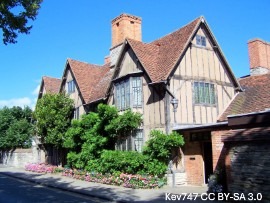
Stratford-upon-Avon home of Shakespeare's daughter is 'At Risk'
Lady Grange’s House repaired on St Kilda
.jpg)
National Trust for Scotland repairs stone cleit with link to famous island resident
Griff Rhys Jones on BBC Radio 4 Today programme
,_Green_Lane,_Derby.jpg)
The Victorian Society’s President unveiled its latest Top Ten Endangered Buildings 2026.
Need a MATE? Book your place now.

IHBC offers free webinars on applying for IHBC accreditation (Full & Associate).
UK Stained Glass Repository finds windows new homes

How are stained glass windows are rescued, stored and repurposed?
APPGEBE report sets high aims for quality
'Government must not sacrifice quality in drive to build 1.5m homes'
New measures protect Historic Shipwrecks from heritage crime

Underwater cultural heritage benefits from new HE guidance
How could the City of London skyline look in 6 years' time?

Visualisation shows approved planning applications as completed buildings
National Trust for Scotland calls for VAT cuts
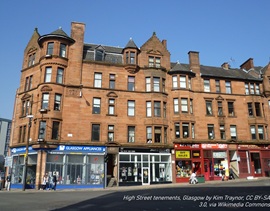
Heritage neglect is encouraged by current policies
IHBC's 'Context' Issue 186 features Industrial Heritage

IHBC's members' journal reports on the challenges of conserving infrastructure
Book now for IHBC Annual School 2026

IHBC Annual School is taking place 18-20 June 2026 in Newcastle
RICHeS Research Infrastructure offers ‘Full Access Fund Call’
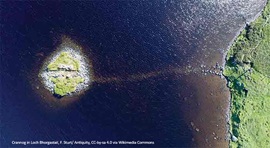
RICHeS offers a ‘Help’ webinar on 11 March
Latest IHBC Issue of Context features Roofing
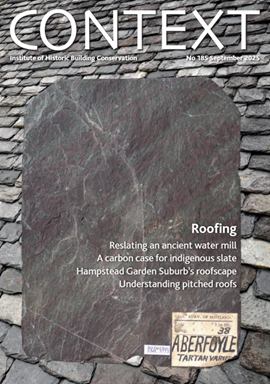
Articles range from slate to pitched roofs, and carbon impact to solar generation to roofscapes
Three reasons not to demolish Edinburgh’s Argyle House

Should 'Edinburgh's ugliest building' be saved?
IHBC’s 2025 Parliamentary Briefing...from Crafts in Crisis to Rubbish Retrofit
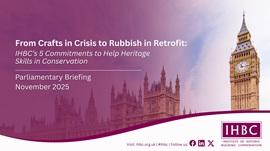
IHBC launches research-led ‘5 Commitments to Help Heritage Skills in Conservation’
How RDSAP 10.2 impacts EPC assessments in traditional buildings

Energy performance certificates (EPCs) tell us how energy efficient our buildings are, but the way these certificates are generated has changed.